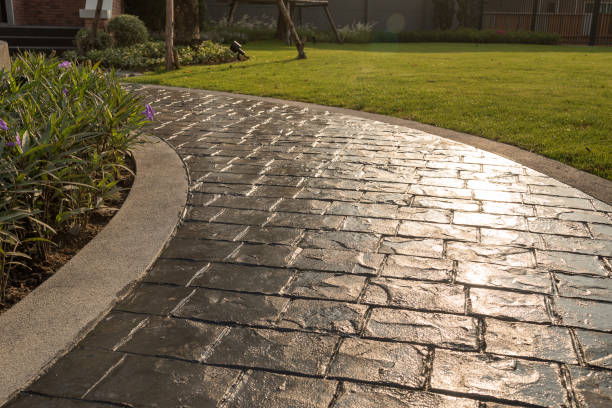
If you've been dreaming about upgrading your backyard but aren't sure what surface material makes the most sense, stamped concrete is one of the most popular choices for Fort Worth homeowners — and for good reason. It delivers the high-end look of natural stone, brick, or wood at a fraction of the cost, and it holds up exceptionally well in the DFW climate. At Azul Outdoors, we've installed stamped concrete patios across Fort Worth, Keller, Arlington, Southlake, and the surrounding DFW area, and we see the same questions come up time and again from homeowners who are considering this upgrade.
This guide covers everything you need to know about stamped concrete patios in Fort Worth — from what it is and why it works so well in North Texas, to the patterns and colors available, what the installation process looks like, and how to take care of it over time.
What Is Stamped Concrete?
Stamped concrete is regular concrete that has been patterned, textured, and colored to mimic the appearance of more expensive materials — natural stone, flagstone, slate, cobblestone, brick, even wood plank. The patterns are pressed into freshly poured concrete before it sets, and color is added either during mixing or applied to the surface as a hardener or stain.
The result is a decorative concrete surface that looks custom and expensive but is far more affordable than laying natural pavers or real stone. It also performs better in some ways, particularly in the DFW area where shifting clay soil is a real concern. Natural pavers can shift and settle unevenly in Texas clay, while a properly installed stamped concrete patio creates one continuous slab that holds its shape.
Why Stamped Concrete Works So Well in Fort Worth
Fort Worth's outdoor living culture means patios, driveways, and hardscaped spaces get used hard and need to hold up to real Texas conditions. Stamped concrete is one of the most practical choices for this climate for several reasons.
It handles DFW heat well. When properly sealed, stamped concrete resists UV exposure and doesn't fade or deteriorate under the intense North Texas sun the way some materials do. A quality sealer also helps protect against the freeze-thaw cycles that DFW occasionally experiences in winter.
It doesn't shift in clay soil. One of the persistent challenges of outdoor hardscaping in Fort Worth is the expansive clay soil that contracts and expands with moisture levels. Natural pavers laid on sand or gravel bases are vulnerable to shifting, heaving, and settling unevenly. A poured concrete slab, properly prepared and reinforced, holds together as a single unit and resists movement far better.
It's low maintenance. Once sealed, a stamped concrete patio requires very little ongoing care. Sweeping, occasional rinsing, and resealing every few years are all that's typically needed to keep it looking great for decades.
It adds real value. A beautifully installed stamped concrete patio enhances your home's outdoor appeal and adds genuine value, which matters in the competitive DFW housing market.
Popular Stamped Concrete Patterns for DFW Homes
One of the most appealing aspects of stamped concrete is the sheer variety of patterns and colors available. Some of the most popular options we install at Azul Outdoors include:
Ashlar Slate — A classic, upscale pattern that mimics natural slate. Clean lines and a refined texture make this a popular choice for modern and transitional-style Fort Worth homes.
Random Stone / Flagstone — This pattern replicates the rustic, organic look of hand-laid flagstone. It pairs beautifully with landscaping and fire pit areas.
Cobblestone — A European-style pattern that gives patios and driveways an elegant, timeless character. Very popular in Southlake and Keller neighborhoods.
Wood Plank — For homeowners who love the look of wood but don't want the maintenance, wood plank stamped concrete delivers that warm, natural aesthetic with none of the warping, splitting, or rotting.
Herringbone Brick — A classic brick pattern that adds structure and charm, ideal for traditional-style homes throughout the DFW metro.
Color choices are just as varied. From warm earth tones that blend naturally into a Texas landscape to bolder charcoal or slate grays that create striking contrast, the color options for stamped concrete allow you to truly customize your patio to match your home's style.
What the Installation Process Looks Like
Understanding what goes into a stamped concrete patio installation helps you know what to expect and why proper execution matters so much. Here's how Azul Outdoors approaches every stamped concrete project:
Site preparation is the foundation of a successful stamped concrete installation. We excavate the area, grade it properly for drainage, and compact the subbase. In Fort Worth, where clay soil can create drainage issues, this step is critical.
Forming and pouring comes next. We set forms to define the shape and dimensions of your patio, then pour and spread the concrete to an even depth. For stamped concrete, we use fiber-enhanced concrete with a minimum 3,000 PSI strength — the same strength as most driveways — to ensure durability.
Stamping and coloring happens while the concrete is still in a workable state. Color hardener is broadcast onto the surface and worked in, then stamps are pressed into the concrete systematically to create the pattern. This is where craftsmanship matters enormously — getting the pattern consistent and the color distribution even requires skill and experience.
Sealing is the final step and one of the most important. A quality sealer locks in the color, protects the surface from staining and weather, and gives the patio that finished, polished look.
How to Maintain Your Stamped Concrete Patio
Stamped concrete patios are easy to maintain, but a few simple habits will keep yours looking great for decades:
Reseal every two to three years. The sealer is what protects the color and surface from UV exposure, staining, and weathering. Resealing on schedule is the single most important maintenance task for any stamped concrete surface. Clean spills promptly. While sealed stamped concrete resists staining, cleaning up spills — especially oils, rust from furniture, or heavily pigmented liquids — promptly prevents anything from penetrating the sealer. Avoid harsh chemicals. Stick to mild soap and water for cleaning. Deicer products containing ammonium nitrate or sulfate can damage concrete surfaces. In Fort Worth's mild winters this is rarely an issue, but it's worth knowing. Power washing with care. A pressure washer can be used for deep cleaning, but keep the pressure moderate and avoid directing the stream at an angle that could lift or damage the sealer.
Is a Stamped Concrete Patio Right for You?
If you're a Fort Worth homeowner looking to add a beautiful, durable, and relatively low-maintenance outdoor living surface, stamped concrete is one of the smartest investments you can make. It delivers high-end aesthetics at a practical price point, holds up to DFW's climate, and can be designed to perfectly complement your home's style and landscaping.

Azul Outdoors is a family-operated concrete and outdoor construction company serving homeowners across Fort Worth, Arlington, Keller, Southlake, and the broader DFW metro. Every stamped concrete project we take on is handled by our own in-house crew — no subcontractors — and backed by 25+ years of stonework, concrete, and outdoor construction experience.
Ready to design your stamped concrete patio? Visit azuloutdoors.com/contact-us to schedule your free estimate today.


.svg)
.svg)